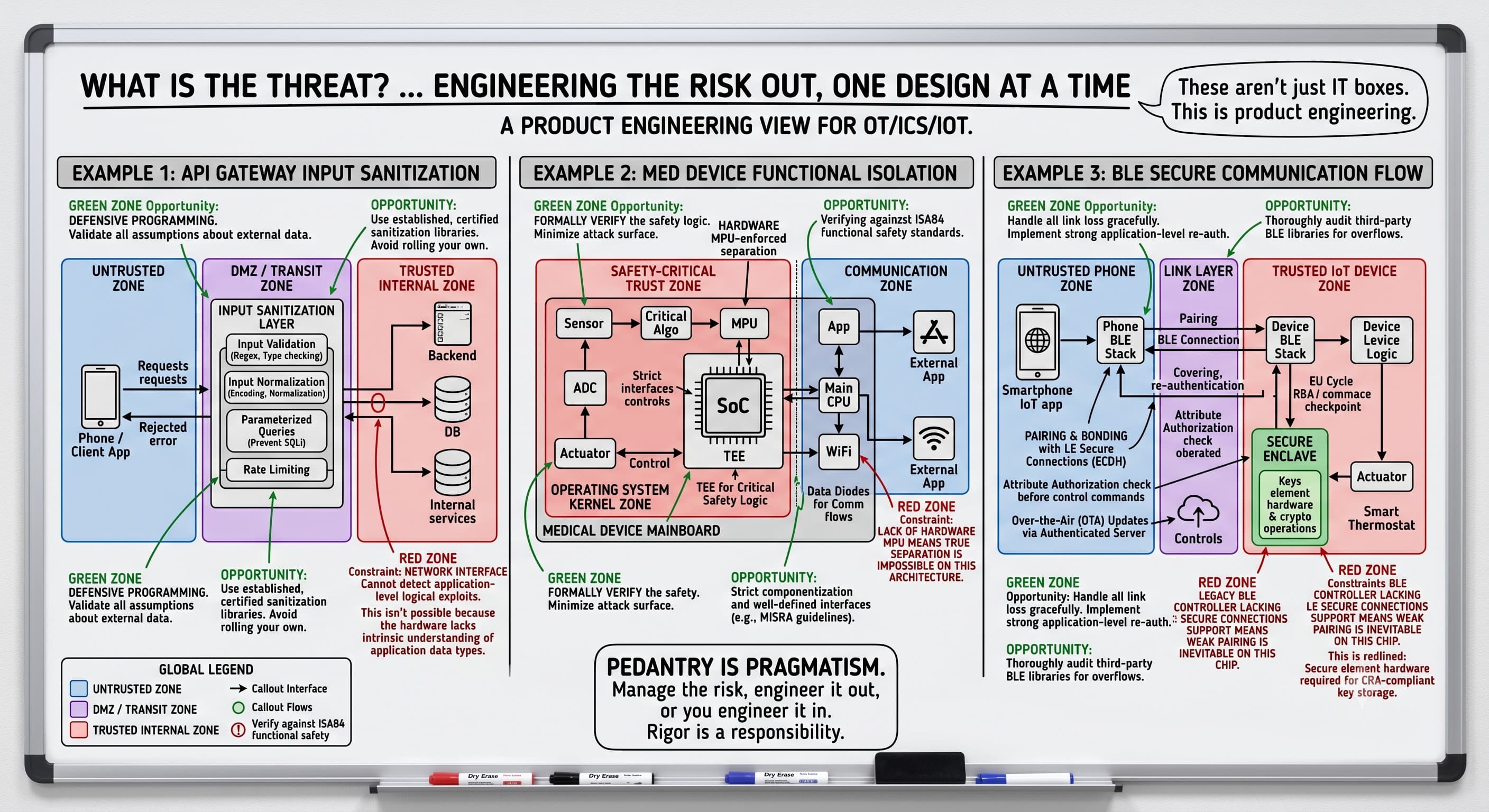
Why We Actually Threat Model – Its Not Just Cyber
Threat modeling is not merely a cybersecurity expense; it is a strategic engineering enabler. By moving beyond theoretical hackers to map system resilience and contain blast radii, proactive organizations can predictably forecast costs, accelerate market delivery, and build safer products.
Ron Brash
Author
There is a pervasive, exhausted narrative in product development: cybersecurity is a bottomless expense, a necessary evil that slows down releases, and a tax we pay to keep our names out of the news. In this worldview, threat modeling is often viewed as an academic exercise in paranoia - a quest for unattainable perfection where security teams chase down every theoretical hacker in the dark.
But if we strip away the security theater, what is threat modeling, really?
It is not just a defensive reflex or cybersecurity-only activity, I see is as a proactive business accelerator, as well as a hallmark of a well-engineered and defensible product (not just for attackers but shows diligence in choosing or implementing our design choices).
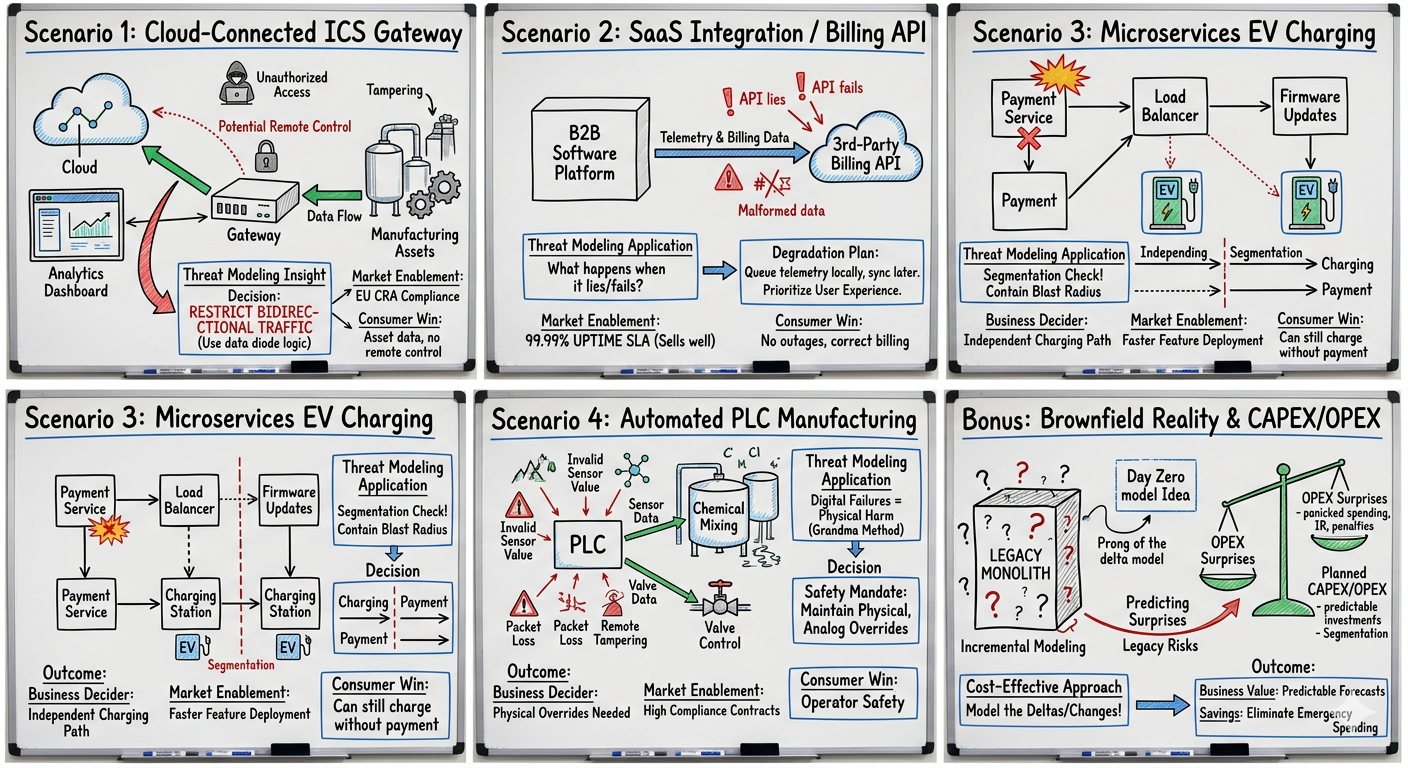
When we stop viewing threat modeling solely through the lens of "cyber" and start treating it as a core component of resilient engineering, the entire paradigm shifts. Perfection is the enemy of the practical. We don't threat model to achieve zero risk; we do it to enable the business, save time to market, and build a higher-quality, more resilient solution. When done right, everyone wins.
Let’s break down the four core questions of why we threat model, evaluate the real-world scenarios, and look at how this practice drives business value far beyond just stopping the bad guys.
1. Is it Cybersecurity?
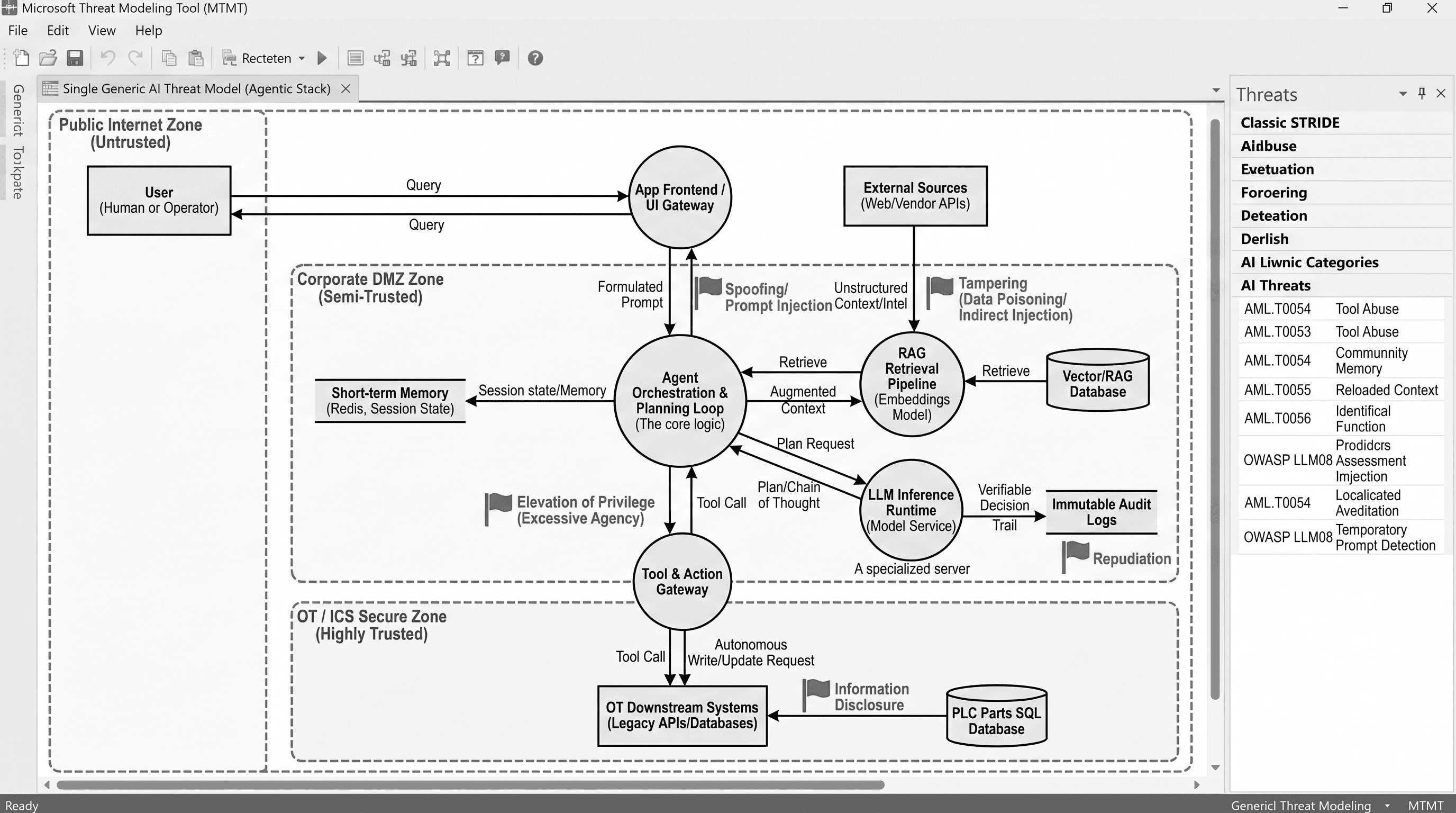
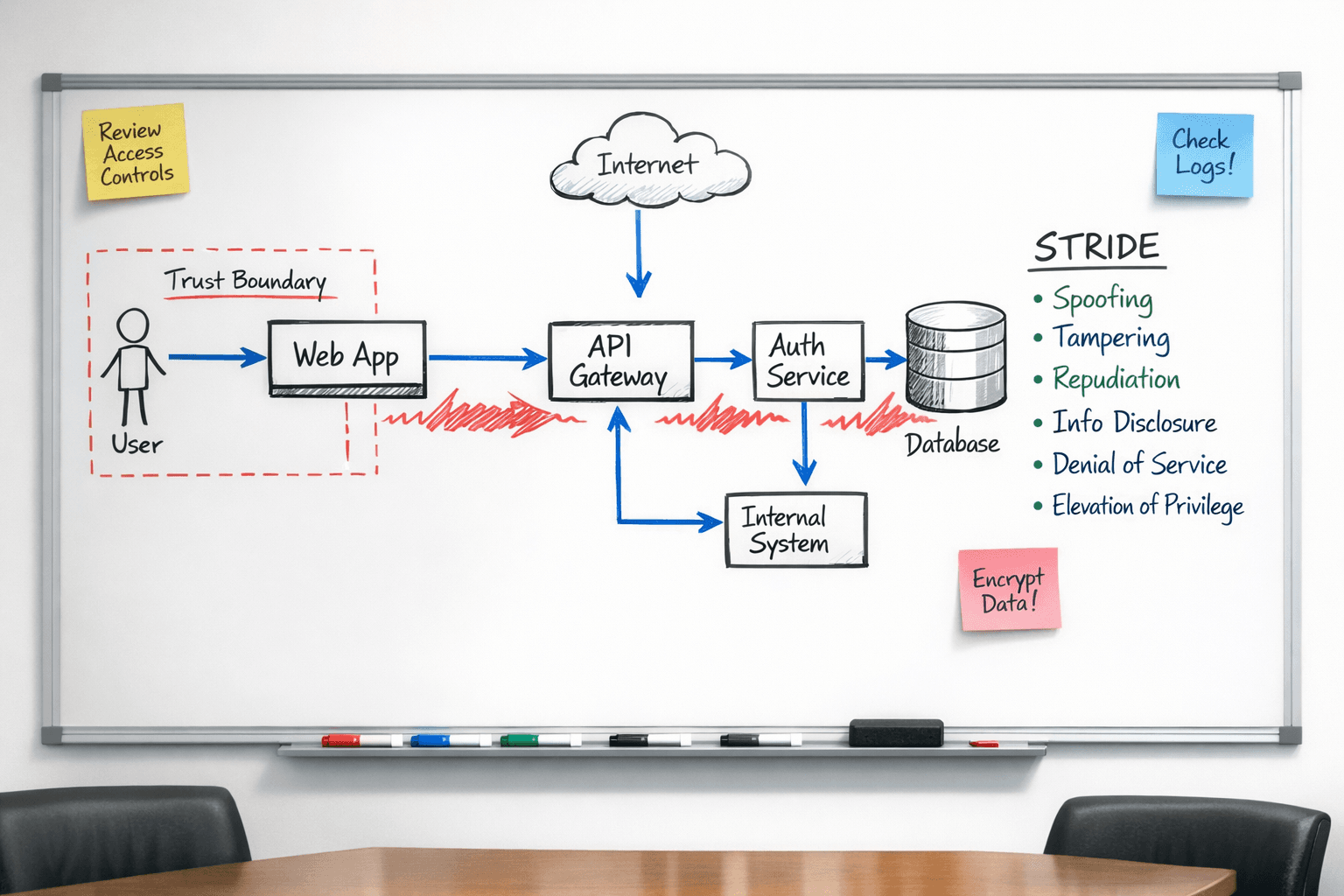
Yes, but that is just the tip of the spear. Traditionally, we use frameworks like STRIDE to ask: How can an attacker spoof, tamper, or disclose this data? But if we only look at malicious intent, we miss the broader architectural value.
The Scenario: A Cloud-Connected ICS Gateway
Imagine a manufacturer rolling out a new gateway to connect legacy Industrial Control Systems (ICS) to a cloud analytics dashboard.
The Threat Modeling Application:
The initial instinct is to model for unauthorized access or firmware tampering. But practically, the threat model serves as a fundamental business decider.
Business Decider | Market Enablement | Consumer Win |
The model highlights that allowing bidirectional traffic (cloud-to-gateway) introduces exponential risk compared to a unidirectional data diode approach. The business can confidently decide to restrict remote control, fundamentally altering the product's scope for the better. | By proactively designing against tampering and documenting the process, the product easily clears regulatory hurdles like the EU Cyber Resilience Act (CRA) or regional critical infrastructure guidelines, accelerating market entry. | Asset owners get the predictive maintenance data they want without losing sleep over the security of their operational technology. |
2. Is it to Ensure Quality?
Quality Assurance (QA) catches bugs - errors in the code. Threat modeling catches flaws - errors in the design. You cannot patch a fundamentally broken architecture, no matter how many unit tests you write. And as they say – 1$ dollar upfront, can save at least 4$ later (some estimates state 10$).
The Scenario: SaaS Integration with a Third-Party Billing API
A product team is building a new B2B software platform that relies on a third-party API for metered billing and provisioning.
The Threat Modeling Application:
Instead of asking "how will a hacker exploit this," I ask "what happens when this API inevitably lies to us, fails, or sends malformed data?"
Business Decider | Market Enablement | Consumer Win |
The model forces the team to decide how the system degrades. Do we suspend user accounts, or do we queue the telemetry locally and sync later? The business decides to prioritize the user experience over immediate reconciliation. | The resulting architecture guarantees a 99.99% uptime SLA because it doesn't hard-fail when a dependency drops. That reliability becomes a core sales differentiator. | The end-user never experiences a service outage or a double-billing error due to a backend synchronization hiccup. The platform just works. |
3. Is it Proper Engineering?
Security is engineering, and the lack of it – results in poor cybersecurity (in most situations). This is my soapbox, and I won’t step off it. Good engineering is about building for smarter failures, containing the "blast radius" of an issue, and ensuring the system operates reliably under duress.
The Scenario: Microservices Architecture for an EV Charging Network
An engineering team is designing the backend for a national network of electric vehicle chargers, breaking down monoliths into microservices (payment, load balancing, firmware updates).
The Threat Modeling Application:
The threat model maps the data flows (DFDs) to ensure that a failure or compromise in one service doesn't cascade. It’s an architectural sanity check.
Business Decider | Market Enablement | Consumer Win |
The model reveals that if the payment gateway goes down, the load balancer also crashes. The business mandates hard segmentation, ensuring charging can continue independently of payment processing. | Modular, segmented architecture means the engineering team can deploy new features to the payment service without requiring full-system downtime or risking the core charging functionality. Time-to-market for new features drops drastically. | A driver stranded in the cold can still charge their car, even if the payment backend is temporarily undergoing maintenance. |
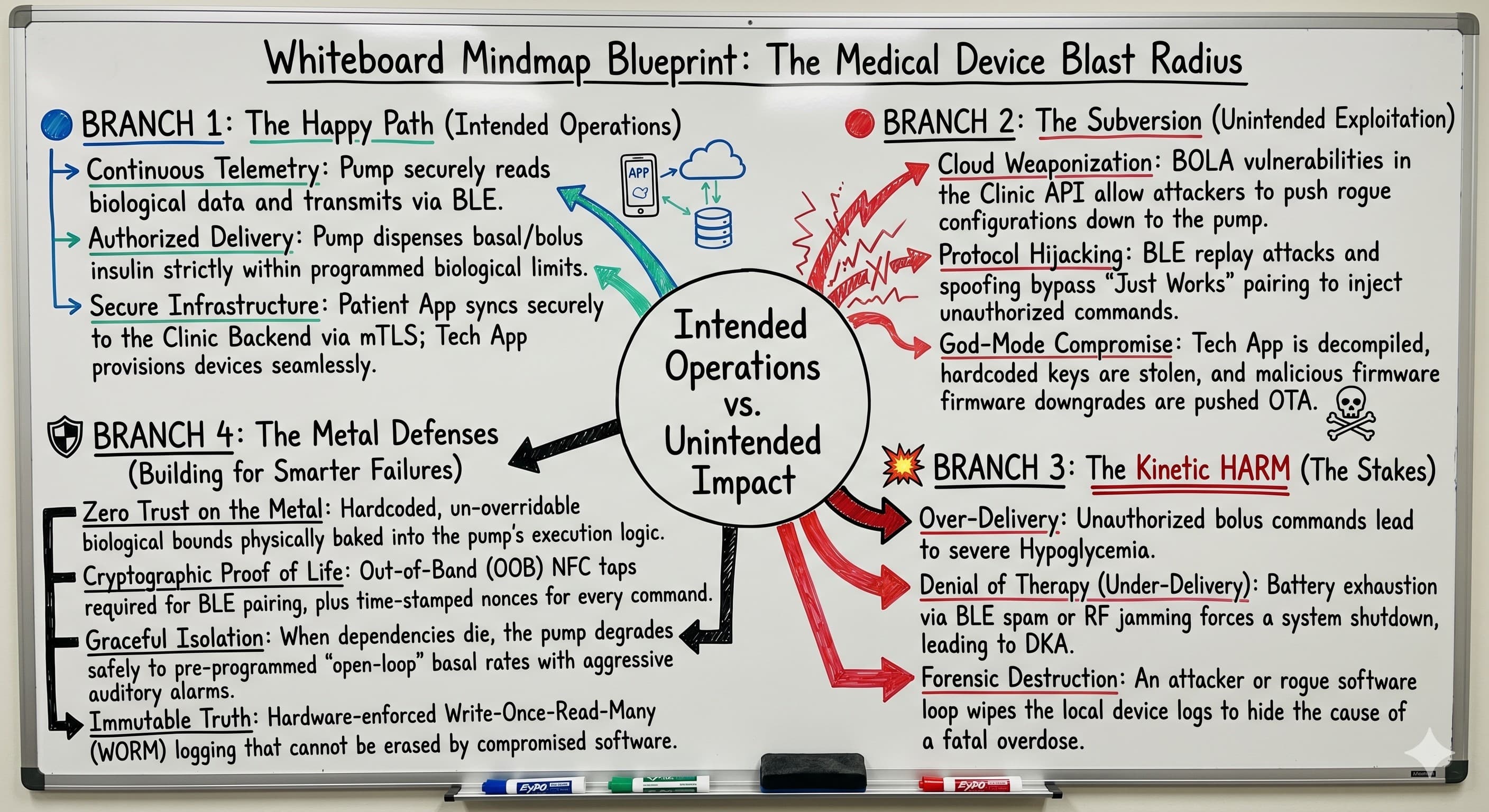
4. Is it to Prevent Unintended Impact and Harm?
In many environments - especially medical devices, automotive, and operational technology - a digital failure has physical consequences. Threat modeling here is about applying the "Grandma Method": is this design intuitively sound, safe, and easily understood without requiring a manual?
The Scenario: Automated PLC-Controlled Manufacturing Line
A facility is upgrading its programmable logic controllers (PLCs) to automate the mixing of volatile chemicals.
The Threat Modeling Application:
We aren't just looking for a nation-state actor; we are looking at physics. What happens if a sensor sends a wildly out-of-bounds value? What if a network switch drops a packet during a critical valve-shutoff command?
Business Decider | Market Enablement | Consumer Win |
The model dictates that digital safety controls are insufficient on their own; physical, analog safety overrides must be maintained. The business avoids the massive liability of relying solely on software for physical safety. | Demonstrating a rigorous, documented understanding of system impacts streamlines safety certifications and vendor risk assessments, allowing the facility to secure lucrative, high-compliance contracts. | The operators on the factory floor go home safely to their families every single day. |
Bonus: The Brownfield Reality and the CAPEX/OPEX Equation
There is a pervasive myth that threat modeling only belongs in one of two places: strictly at "Day Zero" for pristine, greenfield designs, or as an excruciating, expensive "after-the-fact" audit once a system is fully built. But this ignores the reality of modern engineering. Most of what we deal with is brownfield - legacy code, acquired platforms, and systems that have evolved organically over a decade.
The OPEX Spike | The CAPEX Panic | Impact |
A fundamental flaw goes unnoticed until a legacy system fails under load or compromise, resulting in massive, unplanned Operational Expenditure (emergency incident response, severe SLA penalties, and weeks of unplanned developer overtime). | A vulnerability is discovered late, forcing a panicked Capital Expenditure (buying an expensive web application firewall, rushing a third-party security integration, or emergency hardware procurement) to build a wall around a broken system. | Both scenarios illustrate how unmapped architectural debt turns into unpredictable financial surprises. |
So, how do you threat model a massive, undocumented brownfield system without boiling the ocean and burning your budget? I believe it is incremental, and begins with understanding your exposure, and balancing intended, and unintended function to reality.
The Cost-Effective Approach: You do not need to model the entire legacy monolith in one sitting. Instead, you model the delta. When you add a new feature, expose a new API endpoint, or integrate a third-party service, you model that specific boundary. You threat model the changes and the highest-risk intersections. This turns a massive, paralyzing audit into a series of lightweight, continuous engineering checks.
Predicting the Surprises: This is where threat modeling moves from an architect’s whiteboard to the CFO’s spreadsheet. In brownfield systems, unmapped architectural debt is a ticking financial time bomb.
Without a model, you are entirely blind to where that debt will explode into an unpredictable financial surprise. By pragmatically mapping the blast radius in your existing systems, you fundamentally change the financial equation. You move from reactive panic to predictive forecasting.
If the threat model reveals that a legacy database cannot be natively secured, you don't wait for an event, a CVE, malware, or safety-related notice (e.g., FDA). You predictively plan the CAPEX to implement a network segmentation layer in next quarter's budget. It transforms security from an unpredictable, bottomless expense into a planned, manageable component of the engineering lifecycle.
The Verdict: Enablement over Friction
If you are only threat modeling to satisfy a security checklist, or treating it as a punitive audit, you are wasting money. Threat modeling is a multidisciplinary engineering exercise. It does not need to be perfect; it needs to be pragmatic, but you – the reader often have to sell it in non-cyber terms. Here is a little take-away you can put on a slide and modify:
Why we should Threat Model | ||||
Domain | Direct Benefits (Immediate ROI) | Indirect Benefits (Long-term Wins) | Business Benefits / Effect on Profit | Potential Saving Examples |
Engineering & Architecture | Catches fundamental design flaws before a single line of code is written. | Ensures system resilience and limits the "blast radius" when inevitable failures occur. | Reduces rework costs, shortens delivery cycles, and protects margins by preventing expensive architectural redesign late in development. | · Saves ___$ in maintenance · Saves ___ $ in fixes after development, or reduces potential scaling debt |
Product & Strategy | Accelerates time-to-market by eliminating late-stage, blocking rebuilds. | Creates reliable, degrade-gracefully architectures that protect the end-user experience. | Improves revenue capture through faster launches, stronger retention, and fewer customer-impacting failures that erode trust and sales. | · Reduces chances of scaling debt when we go from # customer to # customers in a multi-tenant solution · Improves RFP response if we do X |
Financial & Operations | Converts unpredictable OPEX surprises into planned, forecastable budget items. | Drastically reduces expensive emergency incident response and developer burnout. | Stabilizes operating costs, improves budget accuracy, and preserves profitability by replacing crisis spending with planned investment. | · Improves GTM speed which can give us a X headstart in market · ______ |
Compliance & Market Access | Streamlines regulatory approvals and certifications (e.g., EU CRA, FDA premarket). | Transforms proactive security from a compliance checklist into a competitive sales differentiator. | Opens regulated markets sooner, lowers sales friction, and supports premium positioning by demonstrating credible, defensible product diligence. | · If applicable …. Prevent us from X and help us compete against Y · Reduce potential product certification costs if we plan for it. |
When we view threat modeling as a tool to map our environment, contain our blast radii, build for smarter failures, and forecast our financial investments, the narrative changes. Cybersecurity transforms from a wasted expense into a business enabler. We save time to market by avoiding architectural dead-ends. We eliminate CAPEX and OPEX surprises. We produce a higher-quality, more resilient product.
And ultimately, everyone - from the engineering team to the board to the end consumer - wins.